Discover the differences between commercial printing and screen printing to find the best printing solutions in Los Angeles for your business, branding, and marketing needs.
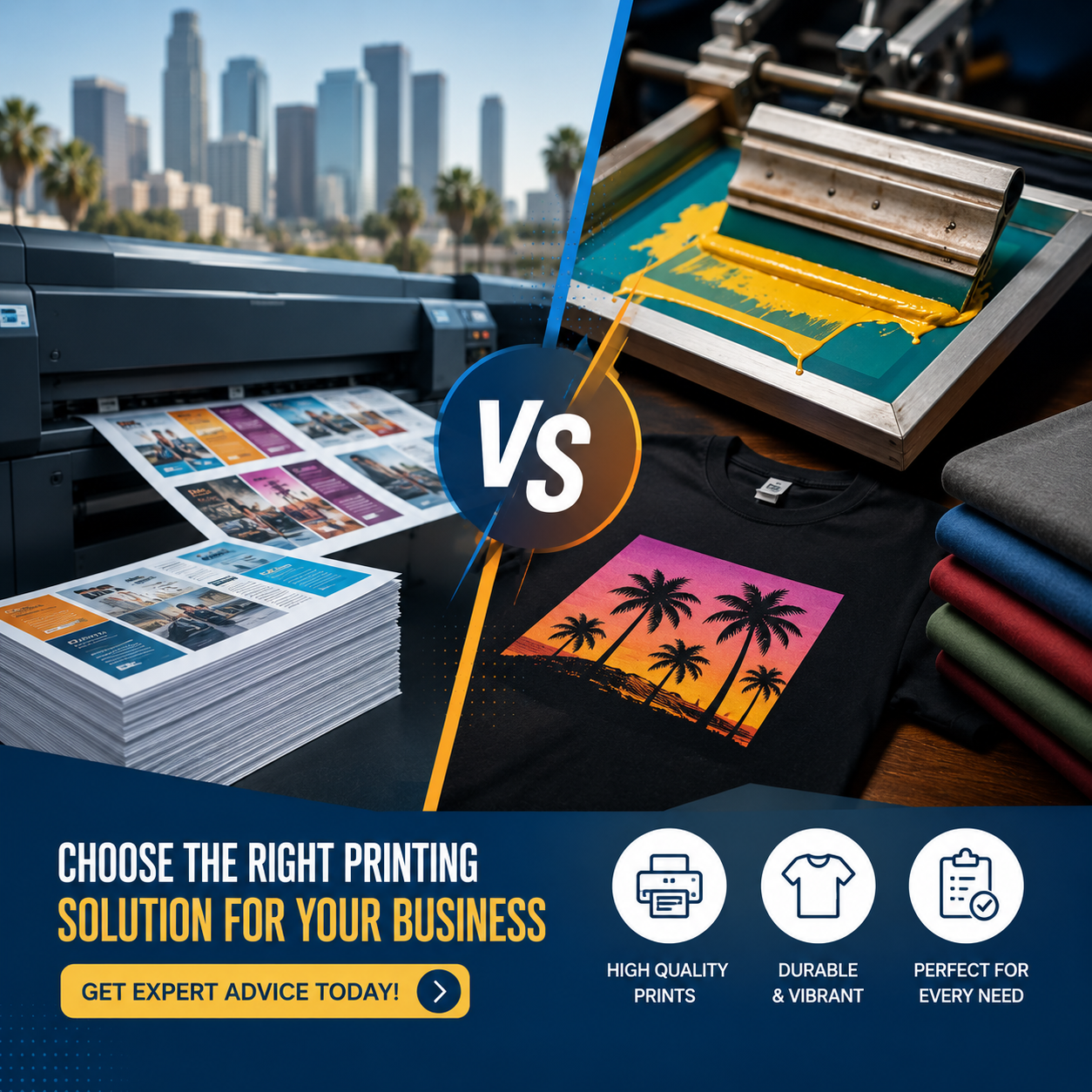
Businesses across LA face the same question every season: which printing method actually fits what they need? Whether you're ordering branded merchandise, marketing flyers, or event banners, the wrong choice wastes money and time. For anyone exploring printing services in Los Angeles, understanding the difference between commercial and screen printing is the first smart step. Both methods have real strengths, and knowing which one suits your project makes the whole process faster, cheaper, and a lot less stressful.
What Is Commercial Printing and Who Uses It?
Commercial printing is an extensive category of digital or offset printed products, from brochures to business cards, catalogs, postcards, banners, etc. This type is the most suitable choice for projects requiring clear typography, photo-quality images, and multicolor graphics without minimum quantity restrictions.
Businesses that lean on commercial printing typically include:
- Real estate agencies printing property flyers and branded folders
- Restaurants needing menus, door hangers, and promotional mailers
- Event planners ordering programs, signage, and promotional materials
- Startups and small businesses that need low-quantity runs done fast
The turnaround is usually quick, and modern digital presses handle everything from a single copy to thousands with consistent quality throughout.
What Is Screen Printing Best For?
Screen printing is a hands-on process where ink is pushed through a mesh stencil directly onto a surface, usually fabric, but also paper, wood, or plastic. It produces bold, vibrant colors that hold up through heavy use and repeated washing, which is why it's the go-to for custom apparel.
Where screen printing really shines:
- Custom t-shirts and hoodies for teams, events, or brand merchandise
- Tote bags and promotional giveaways with high-visibility logos
- Uniforms that need durable, long-lasting print quality
- Large orders where the per-unit cost drops significantly with volume
The catch? It requires setup for each color in the design, so complex, multi-color artwork raises the cost. It's most cost-effective when you're ordering in bulk with a clean, simple graphic.
How Do the Two Methods Compare on Key Factors?
Cost structure works differently for each. Commercial printing costs stay relatively flat regardless of quantity, making it ideal for small runs. Screen printing setup fees mean smaller orders cost more per piece, but larger orders become very affordable.
Color range favors commercial printing for photo-realistic or gradient-heavy designs. Screen printing handles solid, bold colors better and produces a tactile, premium feel that digital printing can't replicate.
Durability goes to screen printing, especially on fabric. The ink bonds deeply with the material and resists fading far longer than a digitally printed surface that sits exposed to friction or outdoor elements.
Turnaround speed typically favors commercial printing for fast, last-minute needs. Screen printing requires film preparation and press setup, which adds a day or two.
Which One Should LA Businesses Actually Choose?
The answer depends on what you're producing and how many pieces you need. If your project involves paper-based marketing materials or a small batch of branded items, Los Angeles printing shops specializing in commercial work will serve you faster and at a lower entry cost.
If you're outfitting a team, launching a merchandise line, or handing out promotional apparel at a trade show, screen printing delivers value that commercial methods can't match at volume.
Many printing companies in Los Angeles offer both services under one roof, which makes it easy to handle a full brand campaign printed flyers, banners, and screen-printed shirts from a single vendor without juggling multiple timelines.
How Do You Find the Right Print Shop in LA?
Look for a shop that asks questions before quoting. A good print partner wants to know your quantity, your deadline, your substrate, and your design complexity before recommending a method. Shops that push one method for every job, regardless of project type, are usually more focused on their own workflow than on your outcome.
Ask for samples. Any reputable provider offering Printing Solutions in Los Angeles should be able to show you printed examples of both commercial and screen work so you can judge quality firsthand before committing.
Check reviews from businesses in your industry. A shop that prints well for a restaurant might not be the best fit for a clothing brand, and vice versa.
Reach out to a local print specialist today, share your project details, and get a clear recommendation before spending a dollar. The right method and the right shop make a bigger difference than most buyers expect.
Frequently Asked Questions
1. Can I use screen printing for paper materials like posters?
Yes, screen printing works on paper and produces a rich, textured finish that looks great for art prints and event posters. It's less common for standard business materials because of the setup cost involved.
2. Is commercial printing good for outdoor signage?
It depends on the material and lamination used. Many commercial printers offer UV-coated or weatherproof substrates specifically designed for outdoor use, so it's worth asking your print shop about finishing options.
3. What's the minimum order for screen printing to make financial sense?
Most print shops will give you a better per-unit rate once you cross a certain quantity threshold. The exact number varies by shop, but orders in the dozens rather than single digits almost always make more sense for screen work.
4. Can one shop handle both commercial and screen printing?
Many shops in LA do offer both. Consolidating with one vendor saves time on communication, file transfers, and coordinating delivery, especially when running a multi-piece campaign.
5. How do I prepare my artwork for either printing method?
For commercial printing, high-resolution files in CMYK color mode work best. For screen printing, vector files with clearly separated spot colors give the cleanest results. Always ask your printer for a file spec sheet before submitting artwork.